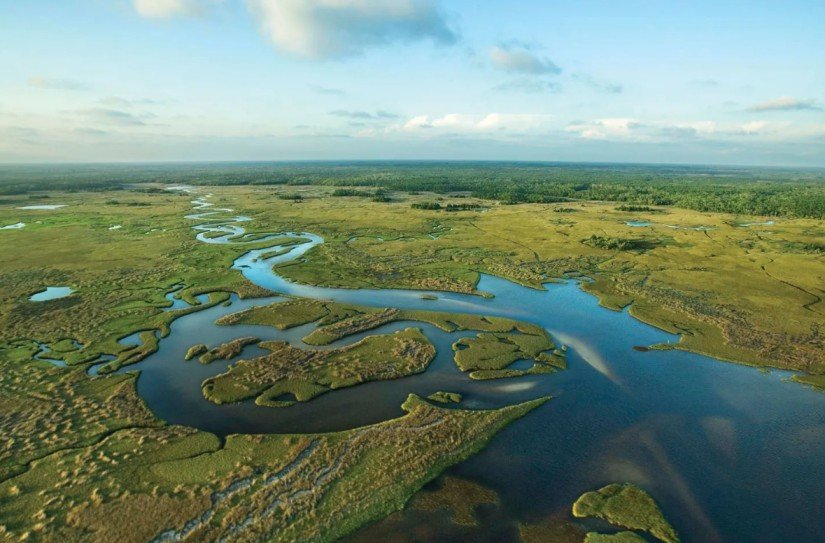
Stretching across the southern tip of Florida, Everglades National Park is one of the most remarkable natural landscapes in the United States. Unlike a traditional forest or mountain park, the Everglades is shaped by a vast, slow-moving flow of freshwater that moves across wetlands, creating an ecosystem filled with mangroves, sawgrass marshes, coastal habitats, and countless forms of wildlife.
The park is often described as a wilderness of water, but its importance extends far beyond its scenery. The Everglades provides essential habitat for rare and threatened species while also playing an important role in South Florida’s environmental balance.
A Landscape Unlike Any Other
The Everglades is not simply a large swamp. It is a complex network of habitats connected by water. Sawgrass-covered wetlands dominate much of the interior, while mangrove forests thrive closer to the coast. Hardwood hammocks rise above the surrounding wetlands, creating small islands where plants and animals find shelter.
Water is the defining force behind this environment. Seasonal changes in rainfall influence the movement of water through the landscape, affecting vegetation, wildlife, and the entire rhythm of the ecosystem.
A Haven for Wildlife
One of the greatest attractions of Everglades National Park is its extraordinary wildlife. Visitors may encounter American alligators resting along waterways, manatees moving through coastal areas, or dolphins appearing in the park’s marine environments.
The Everglades is also an important refuge for numerous bird species. Herons, egrets, ibises, and other waterbirds can often be seen feeding in shallow wetlands. The park is also associated with the elusive Florida panther, one of the region’s most endangered animals.
The diversity of species demonstrates how different habitats can exist together within one interconnected ecosystem.
Exploring the Everglades
There are many ways to experience the park. Walking trails provide opportunities to explore its wetlands and forests at a slower pace, while canoeing and kayaking allow visitors to experience waterways surrounded by mangroves and other native vegetation.
Wildlife watching is another popular activity, particularly during the cooler months when animals are often easier to spot. Photography enthusiasts can find endless opportunities, from dramatic sunsets over the wetlands to close views of birds and reptiles.
For those who want a deeper understanding of the environment, ranger programs and educational experiences can reveal how water, wildlife, climate, and human activity have shaped the region.
Protecting a Fragile Ecosystem
The beauty of the Everglades also highlights the importance of conservation. The ecosystem has faced significant pressure from changes in water flow, development, pollution, invasive species, and other environmental challenges.
Protecting the Everglades requires more than preserving scenic landscapes. Conservation efforts must maintain healthy water systems, protect wildlife habitats, and support the ecological relationships that allow the region to function.
Its protection is particularly important because the Everglades is connected to the broader environmental health of South Florida. What happens within the wetland can influence surrounding ecosystems and communities.
A Place of Lasting Importance
Everglades National Park offers visitors something more meaningful than a conventional outdoor escape. It provides a chance to see an ecosystem working on an enormous scale, where water determines the landscape and wildlife has adapted to an extraordinary environment.
Its quiet waterways, expansive marshes, tropical vegetation, and remarkable animals create a destination unlike almost anywhere else in the country. More importantly, the Everglades serves as a reminder that some of the planet’s most valuable places are also among its most delicate.
Visiting the park is therefore not only an opportunity to experience nature—it is an invitation to appreciate why protecting wild spaces matters for generations to come.

Leave a Reply