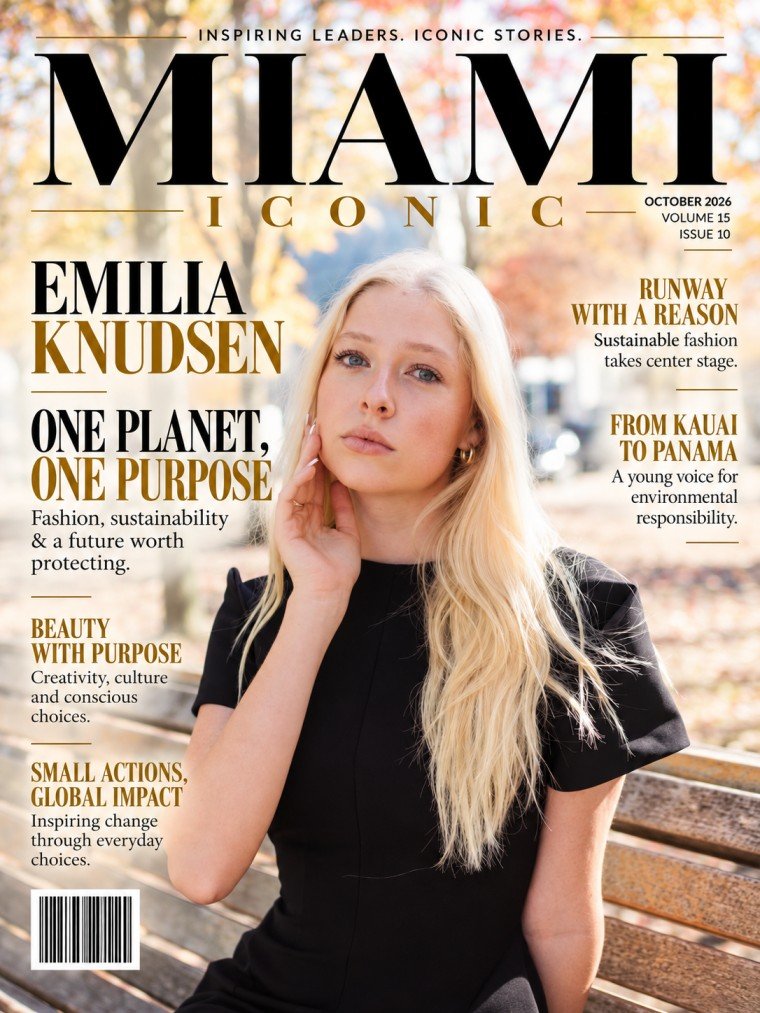
From the shores of Kauai, Hawaii, to the international fashion stage in Panama, 17-year-old model, entrepreneur, and humanitarian Emilia Knudsen is demonstrating how creativity can become a meaningful tool for environmental protection and social progress. Through her involvement in Sustainable Fashion of the World 2026, she is helping promote a broader understanding of beauty—one that values cultural traditions, responsible choices, and a commitment to creating a better future.
For Knudsen, fashion represents much more than clothing, glamour, or artistic expression. It offers an opportunity to influence perspectives, encourage responsible behavior, and bring attention to issues that affect communities around the world. Her participation in the inaugural Sustainable Fashion of the World event, held in Panama City from July 23 to 26, reflected this belief. Organized by the Love for Upcycling Foundation, the four-day gathering welcomed designers, artists, educators, and sustainability advocates from 11 international markets to explore how fashion could contribute to a more environmentally conscious society.
Through runway shows, exhibitions, educational initiatives, and cultural exchange, the event highlighted the potential of creative industries to reduce waste, encourage the reuse of materials, and inspire more responsible consumption. Knudsen viewed the experience as an opportunity to communicate ideas that extend beyond the runway, showing how fashion can inspire people to reconsider their everyday decisions and their responsibility toward the planet.
The Panama gathering offered an alternative vision for an industry often associated with rapidly changing trends and excessive consumption. Designers demonstrated that environmental awareness need not compromise originality, sophistication, or artistic freedom. Instead, working with existing materials, preserving traditional techniques, and minimizing waste can open new avenues for creative experimentation. By presenting these designs, participating models helped bring the concept of sustainable fashion to a wider audience.
One of the collections showcased during the event was Mare Nostrum, created by Ana Cecilia Requena of Miroslava Atelier. Drawing inspiration from the Mediterranean Sea, architecture, and artisanal craftsmanship, the collection brought together historical influences and contemporary design while emphasizing the possibilities of resource-conscious fashion. Knudsen walked the runway wearing pieces from the collection, helping communicate its distinctive approach to elegance and sustainability.
The collection demonstrated how materials that might otherwise go unused can be transformed into sophisticated garments and accessories. Through thoughtful material selection and skilled craftsmanship, Requena highlighted how fashion can embrace creative expression while reducing unnecessary waste.
Another highlight of the event was the work of OML by María Isabel, which showcased how sustainable materials and cultural inspiration can come together in contemporary fashion. The designer presented a natural linen outfit inspired by the Netherlands, featuring buttons in the colors of the Dutch flag and paired with sustainable ballet flats handcrafted from recycled upholstery materials sourced from Dutch trains.
The ballet flats offered a distinctive example of upcycling, giving existing upholstery materials a new purpose rather than allowing them to go to waste. Paired with the natural linen ensemble, they demonstrated how discarded resources can be reimagined as stylish, wearable pieces. The design also celebrated Dutch inspiration through subtle details, bringing together sustainability, cultural identity, and thoughtful craftsmanship.
Through its approach, OML by María Isabel highlighted an important principle of responsible fashion: materials do not lose their potential simply because they have served their original purpose. With creativity and careful design, they can become part of something new. This approach encourages the fashion industry and consumers alike to look beyond conventional materials and consider alternatives that help reduce waste.
To explore more of the designer’s work, visit OML Fashion or follow the brand on Instagram at @OMLFASHIONEU. The brand’s designs reflect the growing interest in fashion that combines aesthetic appeal with a more considered approach to materials and production. Further information is available through the OML Fashion website.
For Knudsen, presenting sustainable designs on an international runway was an opportunity to demonstrate that environmental responsibility and aesthetic appeal can complement one another. Collections such as Mare Nostrum and OML’s upcycled designs show that sustainability can take many forms, from reusing surplus textiles to transforming reclaimed upholstery into new accessories.
Although her modeling career has taken her beyond her home island, Knudsen’s environmental outlook remains closely connected to her upbringing in Kauai. Known for its lush landscapes, waterfalls, mountains, and surrounding Pacific waters, the Hawaiian island has helped shape her appreciation for nature and the importance of protecting it. Growing up in such an environment has reinforced her understanding that the natural world deserves care rather than exploitation.
This perspective reflects the Hawaiian principle of mālama ʻāina, which emphasizes caring for the land and sustaining the environment. For Knudsen, the idea represents a responsibility that extends beyond personal beliefs and into everyday life. Protecting the places where people live, preserving natural resources, and respecting the interconnectedness of ecosystems are essential to ensuring that future generations can enjoy the same natural beauty.
Traveling internationally has further strengthened her awareness that environmental challenges do not stop at geographical borders. Waste produced in one location can eventually affect distant coastlines, while pollution in the oceans can threaten marine ecosystems across vast distances. The consequences of irresponsible consumption are shared by communities regardless of where they live. From island populations to residents of major cities, everyone has a role in protecting the planet.
This understanding also influences how Knudsen views the future of fashion. Rather than encouraging consumers to continually purchase new clothing, sustainable fashion invites them to consider the entire life cycle of what they wear. Buying fewer but better-made garments, repairing damaged clothing, choosing secondhand pieces, and supporting responsible designers are practical ways to reduce unnecessary consumption. Designers can contribute by reusing existing materials, limiting production waste, and creating clothing that remains useful beyond a single season.
Those working in fashion and entertainment also have an opportunity to influence public attitudes. Models, photographers, and other creative professionals can use their visibility to introduce audiences to ideas that might otherwise receive less attention. Knudsen’s participation in the Panama event reflected this potential, demonstrating how a runway presentation can communicate values alongside artistic expression.
She believes that becoming more environmentally responsible does not require abandoning the beauty or excitement associated with fashion. Instead, it encourages people to reconsider what makes a garment valuable. The quality of its construction, the creativity behind its design, the origins of its materials, and the effort taken to minimize its environmental impact can all contribute to its appeal. In this sense, responsible fashion offers a different definition of luxury, one that places greater importance on craftsmanship, longevity, and purpose than on constant novelty.
The same principle of individual responsibility extends into everyday activities beyond clothing. Carrying reusable bottles and shopping bags, planning meals to prevent food waste, composting organic materials, and participating in local environmental cleanups can all support more sustainable communities. Purchasing from local farmers and artisans can also strengthen local economies while encouraging practices that respect natural resources and cultural traditions.
Knudsen recognizes that meaningful environmental progress requires more than individual lifestyle changes. Businesses, governments, and industries must also help make responsible choices more accessible. Cooperation between individuals, communities, and institutions is necessary to address challenges that cannot be solved by personal action alone. Nevertheless, consistent everyday efforts can help establish habits that influence others and contribute to broader change.
Her commitment to making a positive difference also extends into entrepreneurship and humanitarian work. Knudsen launched her first business at the age of nine and subsequently became involved in initiatives intended to support families and communities facing difficulties. One of her current efforts focuses on raising funds for the construction of a deep-water well in Uganda, with the aim of improving access to clean water for a community in need.
The project reflects her understanding that sustainability must include human well-being as well as environmental protection. Cleaner oceans, reduced pollution, and responsible resource use are important goals, but communities also need access to safe water and opportunities to build healthier lives. Education, healthcare, and economic opportunity are equally important elements of a future in which people and the environment can thrive together.
By supporting humanitarian initiatives, Knudsen demonstrates how concern for the planet can be connected to concern for people. Environmental and social challenges frequently overlap, making it important to approach sustainability as a broad commitment to improving living conditions and protecting essential resources. Her work also illustrates that young people can contribute to these efforts long before they reach adulthood.
Through entrepreneurship, advocacy, and community involvement, younger generations can help shape conversations about the issues that will affect their futures. Their contributions may begin with modest projects, but those efforts can create opportunities for learning, collaboration, and wider participation. Knudsen’s journey reflects the idea that age does not have to limit a person’s ability to pursue meaningful goals.
The organization behind Sustainable Fashion of the World shares a similarly broad ambition. Led by the Love for Upcycling Foundation, the initiative seeks to encourage more responsible practices across creative industries and to connect professionals who are interested in environmental innovation. Its inaugural Panama edition brought together participants from different countries and backgrounds, creating opportunities to exchange ideas about design, education, circular production, and cultural preservation.
The initiative’s next edition is planned for September 2027, with ambitions to expand its focus beyond clothing to areas such as architecture, art, education, technology, and the circular economy. This wider scope reflects the understanding that sustainability cannot be addressed by any single profession or industry. Progress depends on people with different skills working together to develop practical solutions and rethink established approaches.
Fashion has a particular ability to communicate these ideas because it connects personal identity with culture, commerce, craftsmanship, and natural resources. The clothing people wear carries stories about the materials used to create it, the hands involved in its production, and the traditions that influenced its design. When these stories emphasize responsible practices, fashion can help audiences understand sustainability in a way that feels relevant to everyday life.
Knudsen’s experiences suggest that success can also be understood in broader terms than professional recognition or personal achievement. Building a career, developing a business, and pursuing individual ambitions can be meaningful accomplishments, but their significance grows when they are accompanied by efforts to support others and protect the future. Contributing to communities, preserving natural resources, and helping create opportunities for people in need can become equally important measures of achievement.
This perspective offers a fresh way of understanding beauty itself. It can be seen in a carefully crafted garment made from surplus materials, a coastline protected from pollution, or a community gaining access to clean water. It can also be found in the cooperation of people who recognize that their individual choices are connected to the well-being of others. These examples reveal that environmental protection, cultural preservation, and humanitarian work are not isolated concerns but closely related responsibilities.
From Kauai to Panama, Knudsen’s journey reflects the potential for fashion to become a platform for ideas that reach beyond appearance. Sustainable Fashion of the World 2026 demonstrated how designers and creative professionals can combine artistic ambition with resource-conscious thinking. Collections such as Mare Nostrum and OML by María Isabel’s recycled-material designs further illustrated how craftsmanship, cultural inspiration, and innovative material use can contribute to a more responsible industry.
Through her modeling career, entrepreneurial efforts, and humanitarian commitments, Knudsen continues to support a vision in which creativity is accompanied by consideration for people and the environment. Her experience serves as a reminder that positive change does not depend exclusively on prominent figures or large organizations. It can begin with ordinary decisions, grow through shared action, and become more powerful when people work toward common goals.
Ultimately, the future of fashion will be shaped not only by the styles that appear on runways but also by the values that guide the industry. Responsible production, thoughtful consumption, cultural respect, and environmental awareness can help ensure that creativity contributes to a healthier world. For Knudsen, the greatest achievement is not simply wearing beautiful designs or building a successful career. It is helping inspire a future in which communities flourish, oceans remain clean, natural landscapes are protected, and coming generations inherit a planet filled with possibility.
The challenge is no longer simply to admire the beauty around us, but to take an active role in preserving it. Every thoughtful choice offers an opportunity to contribute, and when those choices are shared by people across communities and countries, they can help build a more sustainable future for everyone.

Leave a Reply